Monitor weight changes of fruit/ vegetables in real-time
CAT-IoT sensors provide agricultural managers with the ability to monitor weight changes in fruit/vegetables in real-time. The application of CAT-IoT sensors to measure the weight of fruit/vegetables in real-time is captured within the CAT-Iot Patent.
Monitoring weight changes in response to irrigation, heat, and rain can help refine crop yield estimates, irrigation plans, and prevent wastage of water.
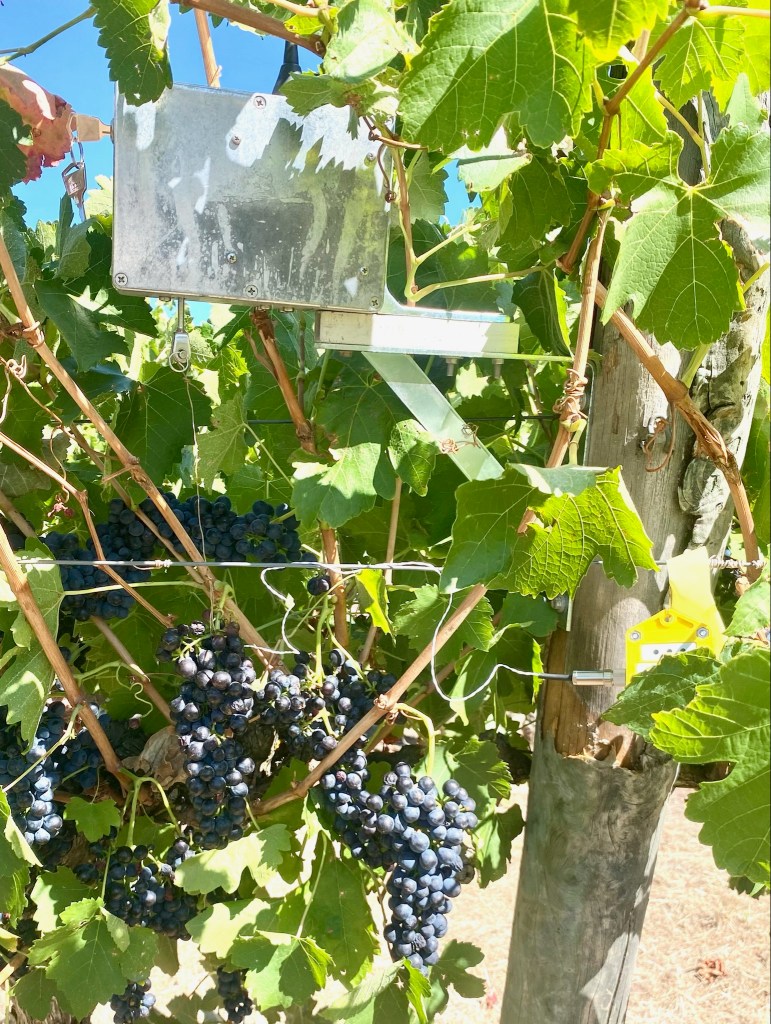
How it works
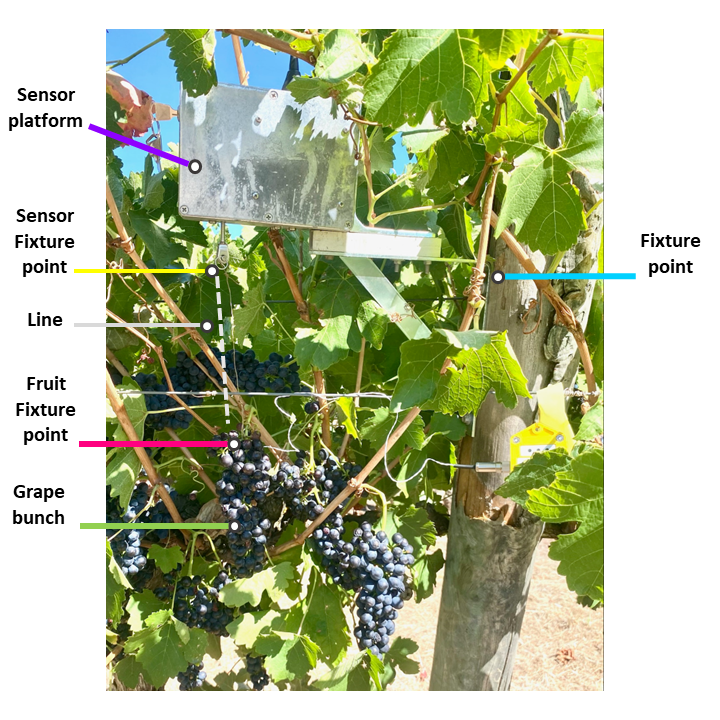
CAT-IoT sensors are fixed to a static point and a supporting line is used to support the fruit/vegetable. As the fruit/vegetable grow overtime the weight is recorded in real-time. Data is sent from the field to the user via any form of communication available within the area.
Previously the only method to obtain crop weight data is to physically cut fruit/vegetable off the plant and weight it. This is undertaken multiple times to obtain a data set, this results in crop loss and is historically inaccurate.
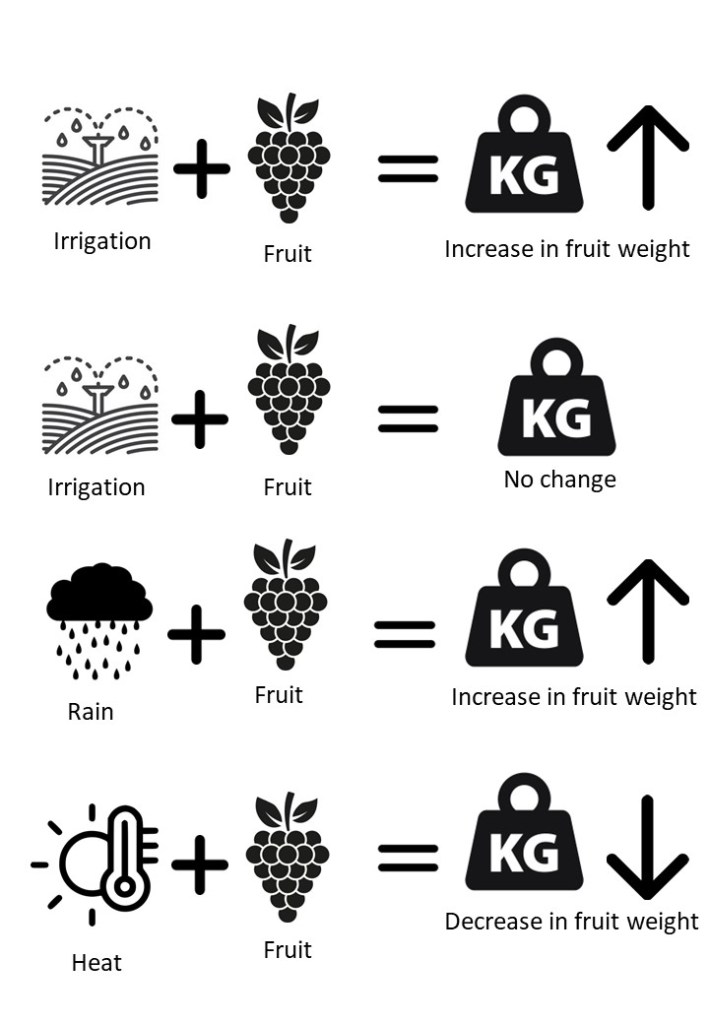
Prevent:
- Incorrect crop yield estimates
- Over/unrequired irrigation
- Crop yield weight reduction
Case studies
Case Study 1 – Thorn Clarke Wines
Growing Season 2020/2021 – January to March 2021
Bunch Weight Trend Analysis Growing Season 2020/2021 – Shiraz
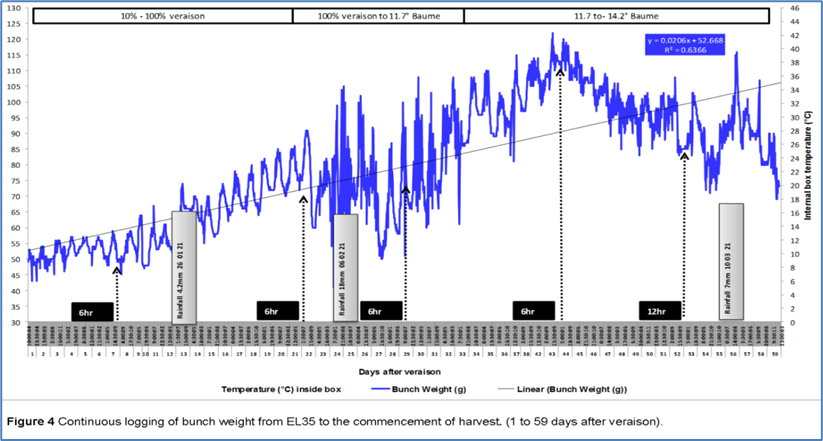
Continuous logging of bunch weight from EL 35 to the commencement of harvest. (1 – 59 days after veraison).
Heatwave and Temperature impacts on Bunch Weight (g) – Shiraz
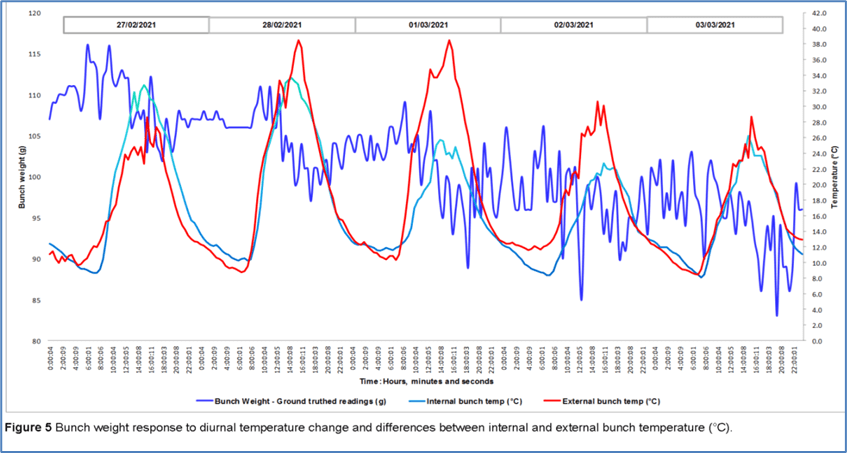
During 5 days of extreme heat, bunch weights recorded by continuous data logging varied diurnally with maximum weight recorded at daily minimum temperatures and their lowest at daily maxima. A declining trend in bunch weight (g) between February 28, 2021 to 2 March 2021 was apparent with the 06.00am readings respectively on 27/02/20221 and 03/03/2021 115g down to 105g. Internal bunch temperatures were from 5oC to 10°C lower than external temperatures. The temperature gaps were smaller when daily maxima were below 30°C on 27 February and 3 March, 2021.
Bunch weight (g) response to Irrigation Application – Shiraz
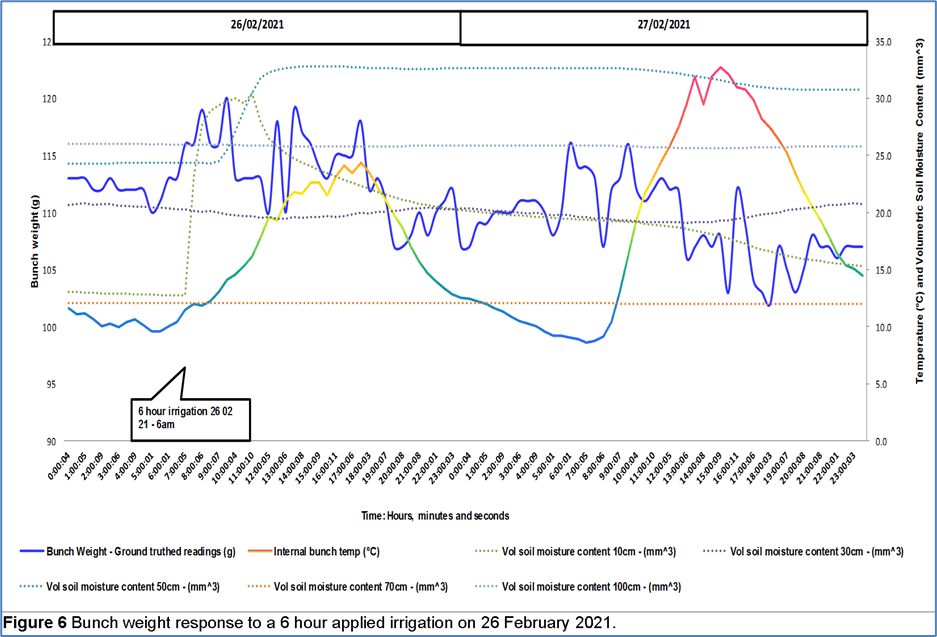

Applied irrigation affected bunch weight. Bunch weight increased by 10g following 24L irrigation (Figure 6) and by 19g following 2 successive irrigation applications of 24L but had fallen to the pre-irrigation weight in 12 hours. (Figure 7). The application of irrigation resulted in measurable increases in soil moisture to 50cm in both cases.
Bunch weight (g) response to Rainfall (mm) – Shiraz
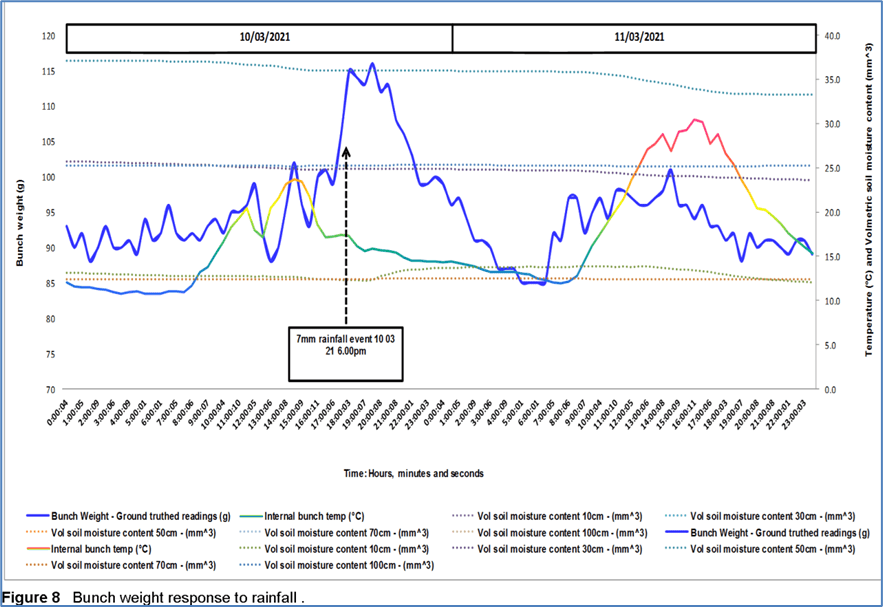
A 7mm rainfall event occurred at 18.00 hours 10/03/2022, (Nuriootpa BOM) resulting in an increase in bunch weight of approximately 30g.
Case Study 2 – Yalumba Wine Company
Growing Season 2021/2022 – January to March 2022
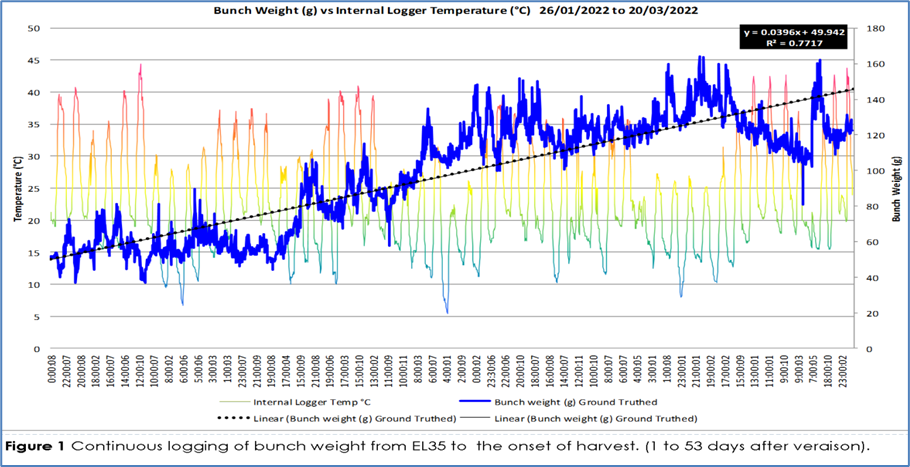
Continuous logging of bunch weight from EL 35 to the onset of harvest. (1 – 53 days after veraison). (Figure 4)
Bunch weight (g) recovery post heatwave and applied irrigation – Cabernet Sauvignon
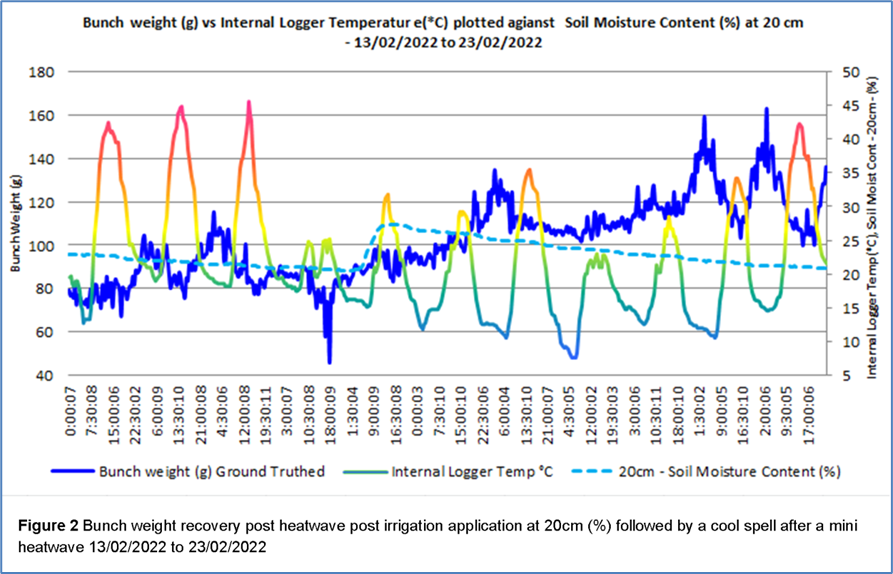
An example of bunch weight recovery after a mini heatwave followed by an applied irrigation and a cool spell. Irrigation response was noted at 20cm in depth.
Bunch weight (g) response to rainfall (mm) 01 03 2022 – Cabernet Sauvignon
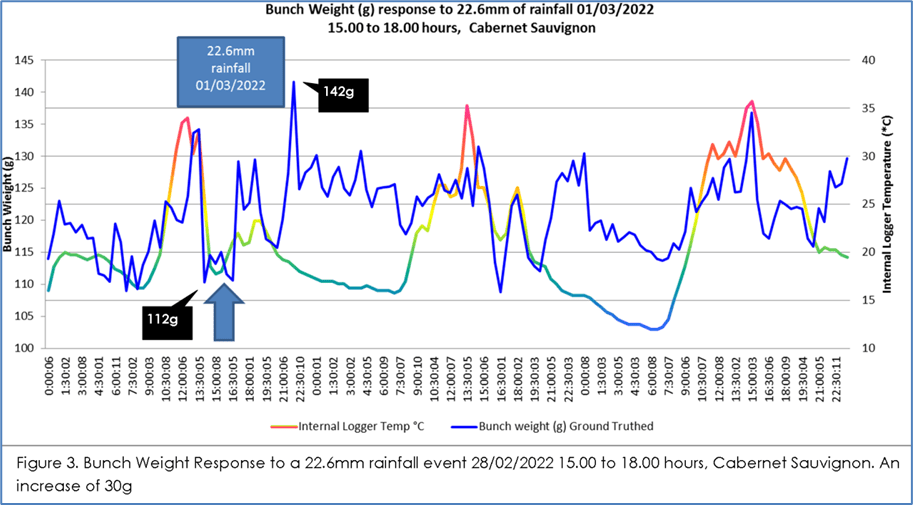
A 22.6mm rainfall event 01 03 2022 (Nuriootpa BOM) resulted in an increase of 30g in the bunch weight of Cabernet Sauvignon
Case Study 3 – Barossa Australia – Vine Vale Trial Site
Growing Season 2021/2022 – January to March 2022
Bunch weight (g) response to rainfall (mm) 01 03 2022 – Shiraz
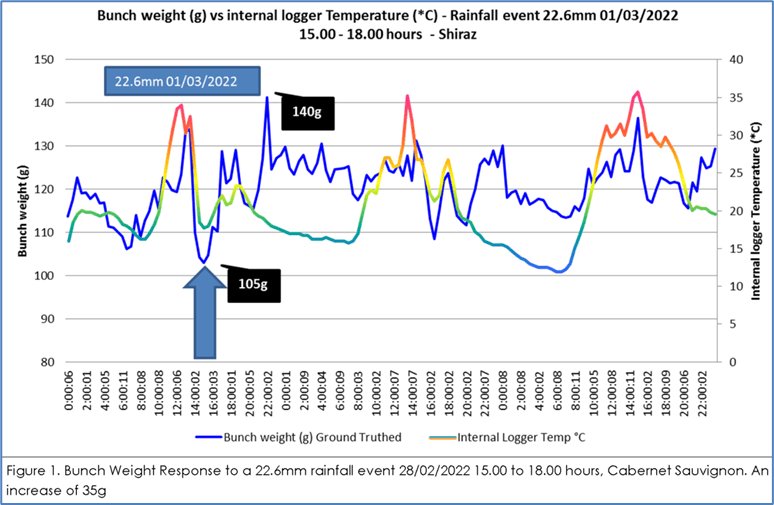
A 22.6mm rainfall event 01 03 2022 (Nuriootpa BOM) resulted in an increase of 35g in the bunch weight of Shiraz.
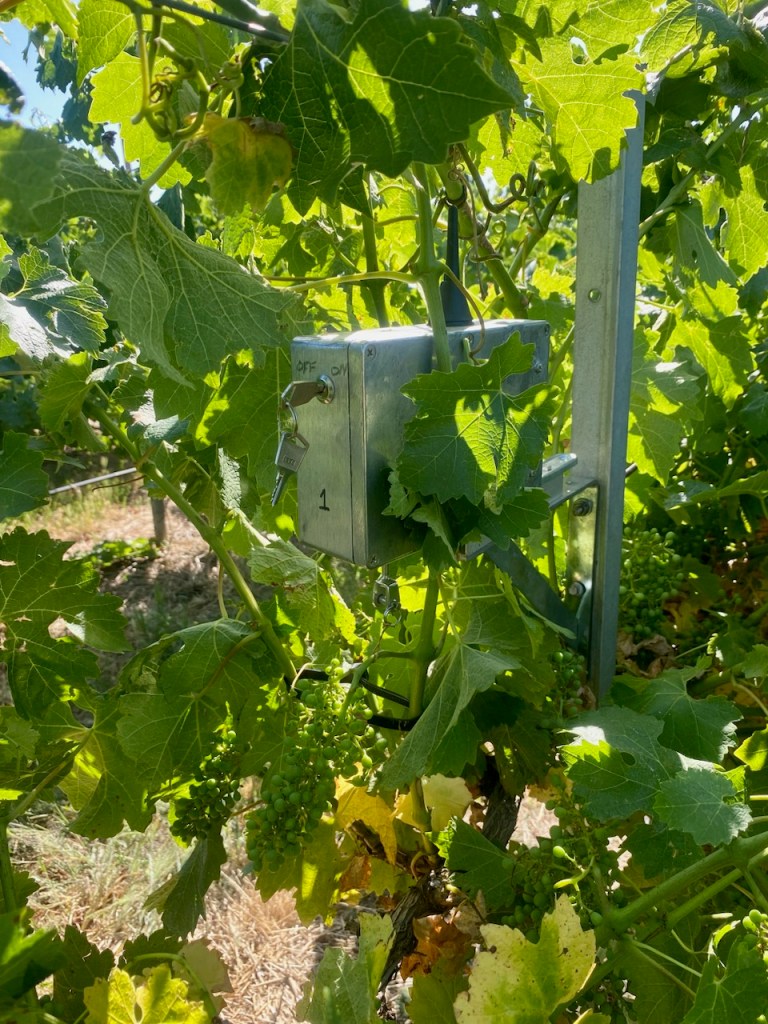
 Ripen Tech - Real-time fruit weight monitoring